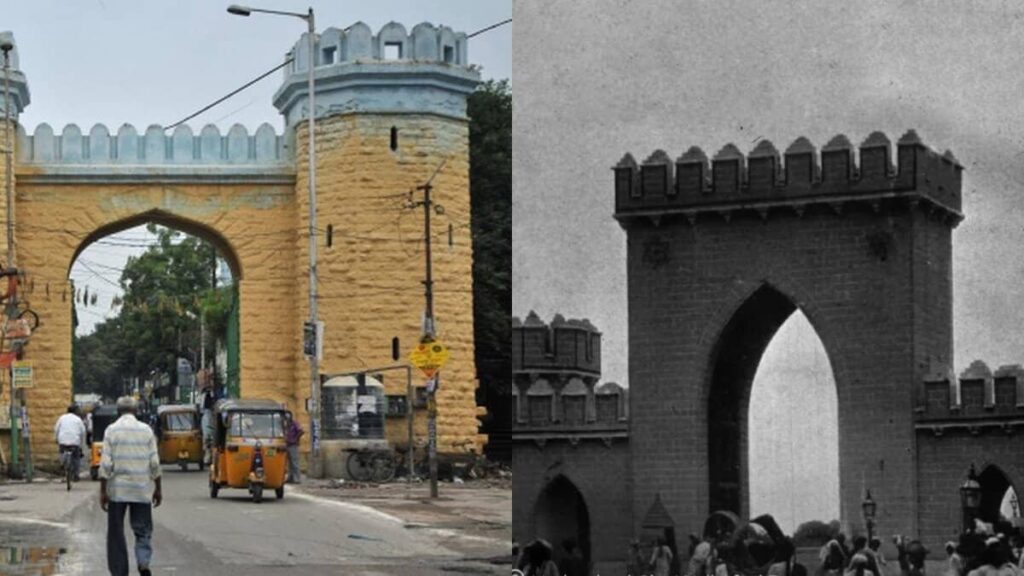
Long before traffic junctions replaced gateways and flyovers cut through history, Hyderabad was a walled city, carefully planned and fiercely protected. Surrounding the Old City stood massive stone walls punctuated by grand gates that controlled entry, ensured security, and subtly shaped the city’s rhythm of life.
Founded in 1591 by Muhammad Quli Qutb Shah, Hyderabad was envisioned as a fortified capital. While Charminar became its symbolic centre, it was the ‘darwazas’ that defined its physical boundaries. These gateways were not merely architectural elements; they were checkpoints of trade, defence posts, and markers of neighbourhood identity.
A city once sealed at sunset
Historical records suggest that Hyderabad had 13 major darwazas, along with several smaller entrances known as khidkis. Built mainly during the Qutb Shahi period and later strengthened under the Asaf Jahi rulers, these gates were shut at night and opened at dawn. Armed guards monitored movement, travellers rested in nearby sarais, and goods entering the city were taxed and recorded.
Each gate led to a specific direction or settlement, slowly giving rise to the neighbourhoods we recognise today, like Yakutpura, Dabeerpura, Gowlipura, Chaderghat, Doodhbowli and Lal Darwaza, among others. Over time, the gates lent their names to entire localities, even after the structures themselves disappeared.
The 13 gates of old Hyderabad
Among the most historically documented darwazas were —
Purana Pul Darwaza
Dabeerpura Darwaza
Aliabad Darwaza
Champa Darwaza
Fateh Darwaza
Dilli Darwaza
Gowlipura Darwaza
Yakutpura Darwaza
Mir Jumla Darwaza
Chaderghat Darwaza
Doodhbowli Darwaza
Lal Darwaza
Afzal Darwaza was the last gate to be added in the 19th century, following the construction of Nayapul.
While some gates were known for their strategic importance, others functioned as commercial entry points, witnessing the daily flow of traders, artisans and travellers from distant regions.