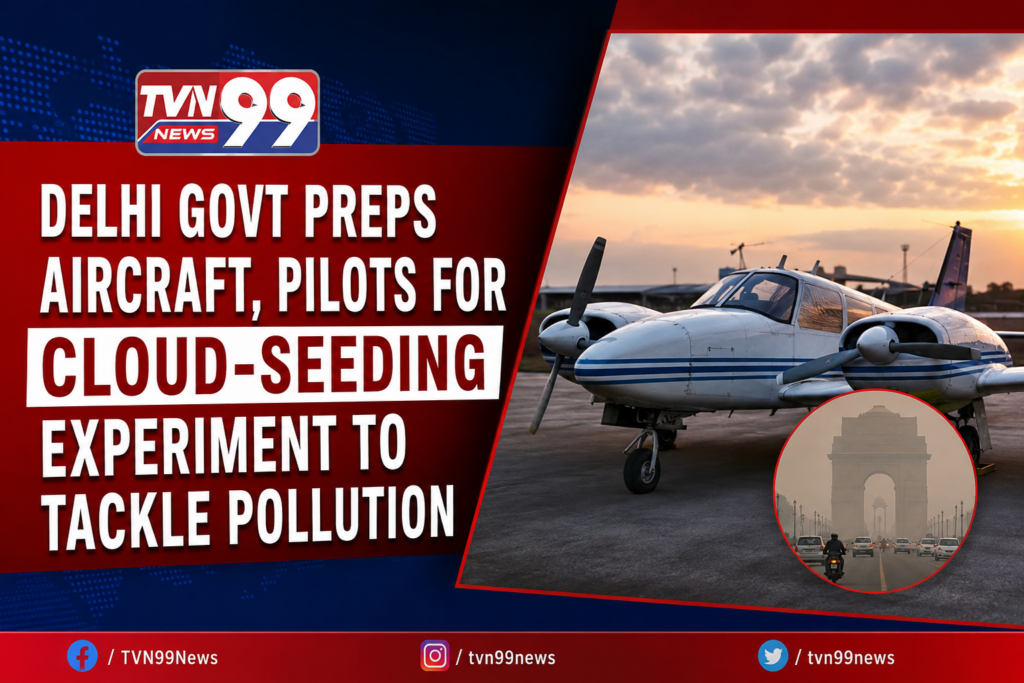
In a significant step toward addressing the persistent air pollution crisis in the national capital, the Delhi government is preparing aircraft and trained pilots for a cloud-seeding experiment aimed at reducing pollution levels. The initiative is part of a broader strategy to explore innovative solutions for improving air quality, particularly during periods of severe smog and hazardous pollution.
The planned cloud-seeding operation marks one of the most ambitious attempts by the Delhi administration to use weather modification technology in the battle against environmental challenges.
What Is Cloud Seeding?
Cloud seeding is a weather modification technique designed to enhance rainfall by dispersing substances such as silver iodide, salt particles, or other cloud-condensation agents into clouds. These particles encourage the formation of water droplets, potentially leading to increased precipitation.
The Delhi government hopes that artificial rainfall generated through cloud seeding could help wash away airborne pollutants, dust particles, and harmful pollutants that contribute to poor air quality across the city.
Aircraft and Pilot Preparations Underway
According to officials, preparations are underway to ensure that suitable aircraft and experienced pilots are available when weather conditions become favorable for the experiment. The success of cloud seeding depends heavily on atmospheric conditions, cloud availability, humidity levels, and wind patterns.
Authorities are coordinating with scientific agencies and aviation experts to finalize operational plans and ensure compliance with aviation safety regulations.
Why Delhi Is Considering Cloud Seeding
Delhi consistently ranks among the world’s most polluted cities, especially during winter months when pollution levels often reach dangerous levels due to a combination of:
- Vehicular emissions
- Industrial pollution
- Construction dust
- Crop residue burning in neighboring states
- Unfavorable weather conditions
Despite various pollution-control measures, the city continues to face recurring air quality emergencies. Cloud seeding is being explored as an emergency intervention that could provide temporary relief during peak pollution episodes.
Potential Benefits of Cloud Seeding
Experts believe that successful cloud seeding operations may offer several benefits, including:
Improved Air Quality
Artificial rainfall can help remove particulate matter such as PM2.5 and PM10 from the atmosphere, temporarily improving air quality.
Reduced Dust Levels
Rainfall can suppress dust generated from roads, construction activities, and open land areas.
Public Health Relief
Cleaner air could reduce respiratory discomfort and health risks associated with prolonged exposure to pollution.
Data for Future Solutions
The experiment may provide valuable scientific insights for future pollution-management strategies.
Challenges and Concerns
While cloud seeding has shown varying degrees of success worldwide, experts caution that it is not a permanent solution to pollution.
Some challenges include:
- Dependence on suitable cloud formations
- Unpredictable weather conditions
- Limited duration of pollution relief
- Environmental and operational costs
- Scientific uncertainty regarding effectiveness in urban pollution control
Environmental experts continue to emphasize that long-term pollution reduction requires sustained efforts focused on emissions control, cleaner transportation, industrial compliance, and green infrastructure development.
Expert Opinions on the Initiative
Scientists and environmental researchers have expressed cautious optimism regarding the experiment. While cloud seeding could offer temporary relief during severe pollution episodes, many experts stress that it should complement—not replace—existing pollution-control measures.
The experiment is expected to generate valuable data that could help policymakers assess the feasibility of future weather-modification interventions in Delhi and other pollution-prone regions.
What’s Next?
The Delhi government is expected to conduct the cloud-seeding trial once favorable meteorological conditions are identified. Aviation teams, scientific agencies, and environmental experts will closely monitor the operation to evaluate its effectiveness and impact on air quality.
If successful, the experiment could become a model for future emergency pollution-response strategies in urban centers facing severe air quality challenges.
Conclusion
As Delhi continues its fight against air pollution, the government’s decision to prepare aircraft and pilots for a cloud-seeding experiment reflects a willingness to explore innovative solutions beyond traditional pollution-control measures. While experts agree that cloud seeding is not a long-term cure, the trial could provide valuable insights into how weather modification technologies might assist in managing severe pollution episodes in the future.