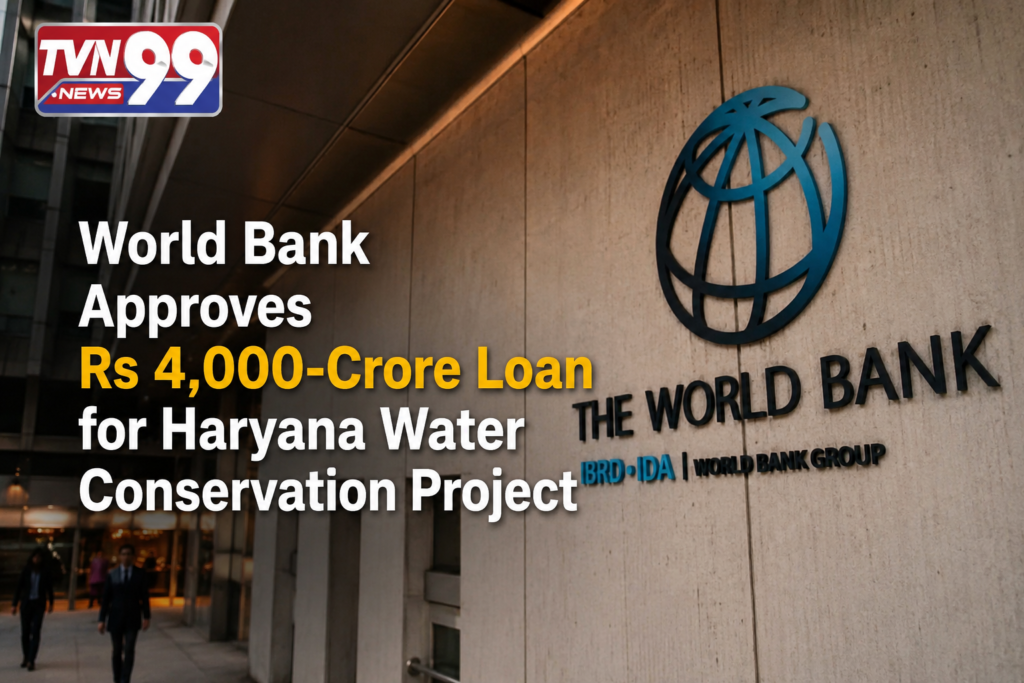
In a significant step toward sustainable water management, the World Bank has approved a loan of approximately ₹4,000 crore for a major water conservation initiative in Haryana. The project is expected to strengthen the state’s efforts to address groundwater depletion, improve irrigation practices, and ensure long-term water security for millions of residents.
The funding comes at a crucial time as Haryana continues to face growing challenges related to declining groundwater levels, increasing agricultural water demand, and climate-related pressures on water resources.
Key Objectives of the Project
The Haryana water conservation project aims to:
- Improve groundwater recharge and management systems.
- Promote efficient irrigation techniques among farmers.
- Enhance water-use efficiency in agriculture.
- Strengthen water governance and monitoring mechanisms.
- Support climate-resilient water management strategies.
- Encourage sustainable use of surface and groundwater resources.
Experts believe the initiative will play a critical role in reducing water stress across several districts that have experienced severe groundwater depletion in recent years.
Addressing Haryana’s Water Challenges
Haryana is one of India’s leading agricultural states, but intensive farming practices and heavy dependence on groundwater have put significant pressure on its water reserves. Several regions have reported alarming declines in groundwater levels, raising concerns about long-term agricultural sustainability.
The World Bank-supported project is expected to introduce modern water management solutions and encourage farmers to adopt water-efficient technologies that can reduce wastage while maintaining productivity.
Economic and Environmental Benefits
The ₹4,000-crore investment is expected to generate multiple benefits, including:
Improved Agricultural Sustainability
Farmers may gain access to better irrigation systems and water-saving technologies, helping improve crop productivity while conserving water resources.
Enhanced Climate Resilience
The project will help communities adapt to changing weather patterns, drought conditions, and increasing climate-related risks.
Long-Term Water Security
By strengthening conservation measures and improving resource management, Haryana aims to secure water availability for future generations.
Rural Development Support
Improved water infrastructure can contribute to better livelihoods, increased agricultural income, and stronger rural economies.
Government and World Bank Collaboration
The partnership between Haryana and the World Bank highlights the growing focus on sustainable development and climate-resilient infrastructure. The project aligns with India’s broader goals of water conservation, environmental protection, and efficient resource utilization.
Officials expect the initiative to serve as a model for other states facing similar water management challenges.
What This Means for Haryana
The World Bank’s approval of the ₹4,000-crore loan represents a major investment in Haryana’s environmental and agricultural future. With water scarcity becoming an increasingly pressing issue across India, large-scale conservation projects such as this are expected to play a vital role in ensuring sustainable growth and resource security.
As implementation progresses, stakeholders will closely monitor the project’s impact on groundwater conservation, irrigation efficiency, and overall water sustainability across the state.